September 1, 2026
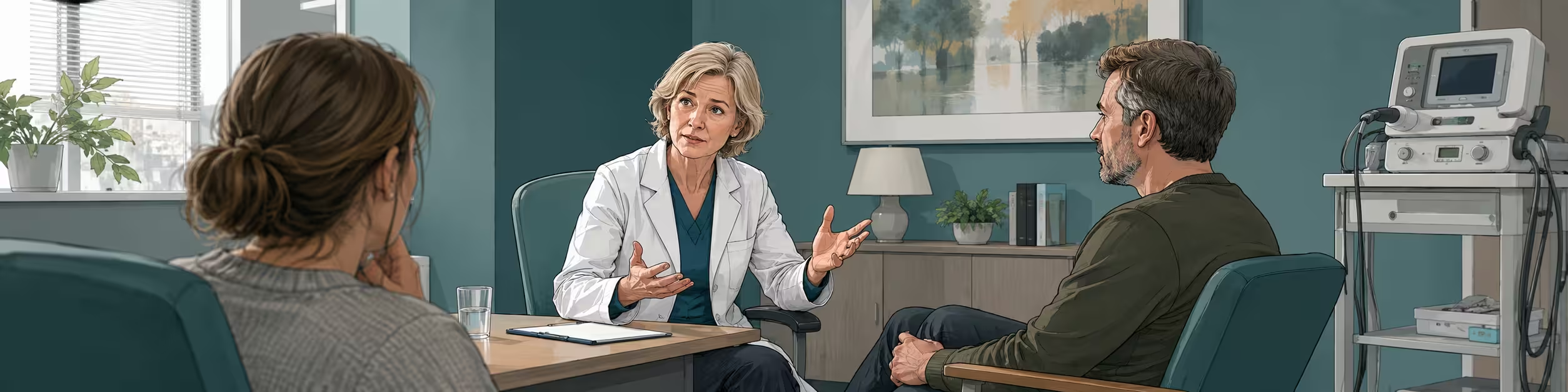
When ECT’s history shapes care
ECT discussions work better when clinicians address history, stigma and memory risks plainly.
Read briefing
Daily Clinical Briefings
ECT discussions work better when clinicians address history, stigma and memory risks plainly.
Read briefing
Chronic insomnia often persists through behaviours intended to protect sleep.
Read briefing
Match liver surgery to anatomy and avoid treating steroid response as diagnostic proof.
Read briefing
Match investigations to the clinical question, and avoid treating uncertain results as definitive.
Read briefing
ARDS recognition and lung-protective, ECMO systems, paediatric IgA vasculitis follow-up and more.
Read briefing
Acute porphyria, ADHD assessment and skeletal signs guide recognition of rickets.
Read briefing
Maternal RSV vaccine effectiveness, urgent investigation of persistent bone pain, recognition of parkinsonism and DBT risk prioritisation shape today’s clinical briefing.
Read briefing
REBOA as a bridge to haemostasis, direct suicide-risk questioning and longitudinal care for ALS risk-variant carriers.
Read briefing
Dynamic HCM murmurs, cycle-linked prescribing, fragility-fracture screening and tongue-movement assessment for neck lumps.
Read briefing
A cold swollen leg in pregnancy needs neurovascular assessment before anticoagulation alone becomes the default plan.
Read briefing.avif)
Restrictive intake needs medical stabilisation and capacity work, while AKI and post-TAVR pauses demand reassessment before reassurance.
Read briefing
Start with adolescent suicide assessment, then read tear gas exposure and tyrosine deficiency for three cases where one reassuring sign can mislead.
Read briefingBrowse and listen free in the app. Premium adds learning notes, MCQs, reflections, activity tracking and Excel exports for your CPD or appraisal records.




.svg)