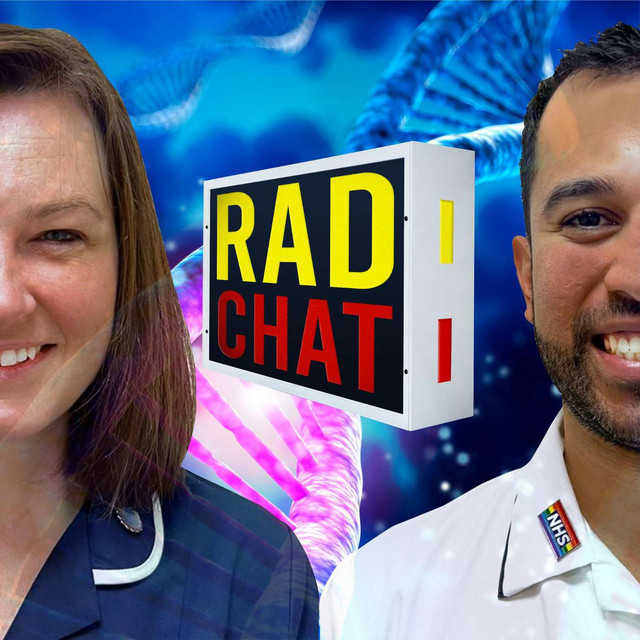
Rad Chat is the multi-award winning, first therapeutic radiographer led oncology podcast, designed for cancer patients, healthcare professionals, academics, and researchers. Naman Julka-Anderson and Jo McNamara are both therapeutic radiographers who have unique backgrounds, bringing specialist knowledge and skills to the conversation. Their guests include people living with and beyond cancer, healthcare professionals, researchers, and leaders within healthcare.


Serious mental illness can distort cancer care through diagnostic overshadowing, restricted treatment choices and unmet psychological needs. Shared decision making, attention to new physical symptoms and meaningful oncology–mental health liaison can challenge assumptions about what an individual can tolerate.
Therapeutic radiography combines treatment technology with sustained patient contact, while departmental observation, placement support, debriefing, personal tutors and practical communication training help students navigate academic demands and emotionally difficult clinical encounters.
Extremity sarcoma care requires deliberate normal-tissue sparing despite access to IMRT and advanced equipment, while persistent patient-reported side effects, conference learning and international collaboration can help identify gaps that technology alone does not solve.
A radiotherapy planning-check script identifies laterality, couch-limit, naming and machine-selection errors before plans progress, with local audit data showing fewer planning errors and illustrating how earlier correction can save work without necessarily changing the treatment start date.
Patient contact, placement experience and career variety shape therapeutic radiography training choices, while conference networking and academic interests can broaden professional development without assuming that one difficult course or placement component represents the whole profession.
Stereotactic radiosurgery for brain metastases depends on total tumour volume, performance status, life expectancy and systemic disease control, while platform choice, treatment burden, fatigue, swelling and informed discussion of alternatives all influence patient-centred treatment decisions.
AI-assisted oncology still requires whole-patient data and multidisciplinary validation, while unequal trial representation, inconsistent outcome reporting, affordability and implementation barriers can determine whether promising innovation actually improves access and patient care.
Radiotherapy equipment contracts need to include planning capability, licences, accessories and replacement arrangements, while satellite services illustrate how local access, machine resilience, transport, facility design and advance capacity planning affect what treatment can safely be delivered.
Low-dose radiotherapy is considered as an anti-inflammatory treatment for selected persistent musculoskeletal conditions, while intermediate doses target benign hyperproliferative disease, with patient selection, conservative treatment, anatomy, age, dose and irradiated tissues shaping decisions and consent.
Allied health value is shown through patient experience, clinical outcomes and cost-effectiveness rather than contact numbers alone. Starting with one condition and one measurable outcome helps clinical and finance teams trace delayed benefits across the wider pathway.


.svg)