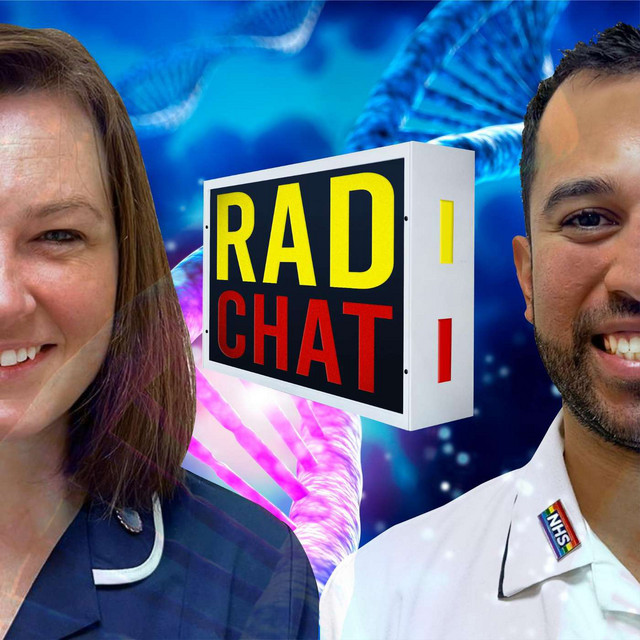
Rad Chat is the multi-award winning, first therapeutic radiographer led oncology podcast, designed for cancer patients, healthcare professionals, academics, and researchers. Naman Julka-Anderson and Jo McNamara are both therapeutic radiographers who have unique backgrounds, bringing specialist knowledge and skills to the conversation. Their guests include people living with and beyond cancer, healthcare professionals, researchers, and leaders within healthcare.


Changing brain anatomy can undermine generous glioblastoma treatment margins; regular adaptation improves targeting and reduces normal-brain dose, while reported findings remain separate from a randomised trial in development and imaging choice follows the clinical problem.
Resource-intensive adaptive radiotherapy needs continuing training and workflow development; repeat teaching visits address missed learning, while experienced clinical peers provide practice-based support that extends beyond the vendor's remit.
Online adaptive radiotherapy discussions need to weigh normal-tissue toxicity alongside tumour control and distinguish patient benefit from departmental efficiency; peer exchange supports shared learning, but vendor support alone cannot create collaboration.
MR-linac pathways combine diagnostic and therapeutic radiography skills, competency training and safety governance; coordinated clinician attendance supports one-stop cord compression care, while delegation of tasks does not transfer clinical responsibility.
Functional MRI biomarkers may help investigate residual tumour after radiotherapy, separately from online motion tracking; proposed treatment changes remain possibilities rather than established protocols, and clinical input helps connect technology development with practice.
Reference-plan settings influence daily adaptive radiotherapy, while pancreatic anatomy affects planning complexity; an AI checker derived from historical plans and review comments remains preliminary, with testing limited to a couple of simulated cases.
Five-fraction MR-guided treatment for early glottic cancer trades longer sessions for fewer visits while monitoring internal movement; limited acute toxicity in ten patients does not establish long-term safety or superiority over alternative approaches.
Real-time cardiac and respiratory motion tracking aims to maintain radiotherapy target coverage, although clinical benefits remain research goals; ventricular tachycardia treatment presents the additional challenge that the target and organ at risk occupy the same heart.
Daily MR images provide longitudinal information about tumour changes, but their meaning and use in treatment selection remain research questions; clinical visits help engineers translate patient-care needs into relevant technical development.
Daily imaging and adaptive replanning allow smaller margins in glioblastoma treatment while tracking tumour migration; early single-arm findings address marginal-recurrence safety, but historical comparisons do not establish improved survival.